While we Californians are mired in the throes of a biting winter cold spell (daytime temps in the low 50s!) Tanner asked me to pass along some tips for avoiding two of the most common and most serious winter dangers for dogs: Frostbite & Hypothermia. Frostbite occurs after prolonged exposure to cold temperatures (below 32 degrees Fahrenheit), especially when there’s a high wind-chill factor. When outdoor temps drop, your dog’s body diverts blood to the core organs, leaving the skin and extremities – nose, tail, tips of the ears, and scrotum – at risk of frostbite. Signs are not always visible immediately but symptoms include pale, hard skin that remains cold to the touch once the animal is brought indoors, or swelling and redness once the skim warms. If not covered and treated, frostbite may result in permanent damage. In severe instances, the affected tissue or limb must be removed to avoid potentially fatal infection. Hypothermia can take place when your dog’s core temperature drops below the normal range of 100 and 102.5 F. If it dips to 99 – 90 F, your dog is at risk for mild hypothermia. 90 – 82 F put’s him at risk of moderate hypothermia. Below 82 and he’s in jeopardy of severe, life-threatening hypothermia. Symptoms of hypothermia include slowed pulse, shivering shallow breath, non-responsiveness to stimuli, and collapsing. If your dog shows signs of hypothermia, warm him with a covered water bottle or heated blanket and call your vet immediately.
 |
| Tanner with cousin Anthony and Delta |
 |
|
‘Thank You’, Tanner
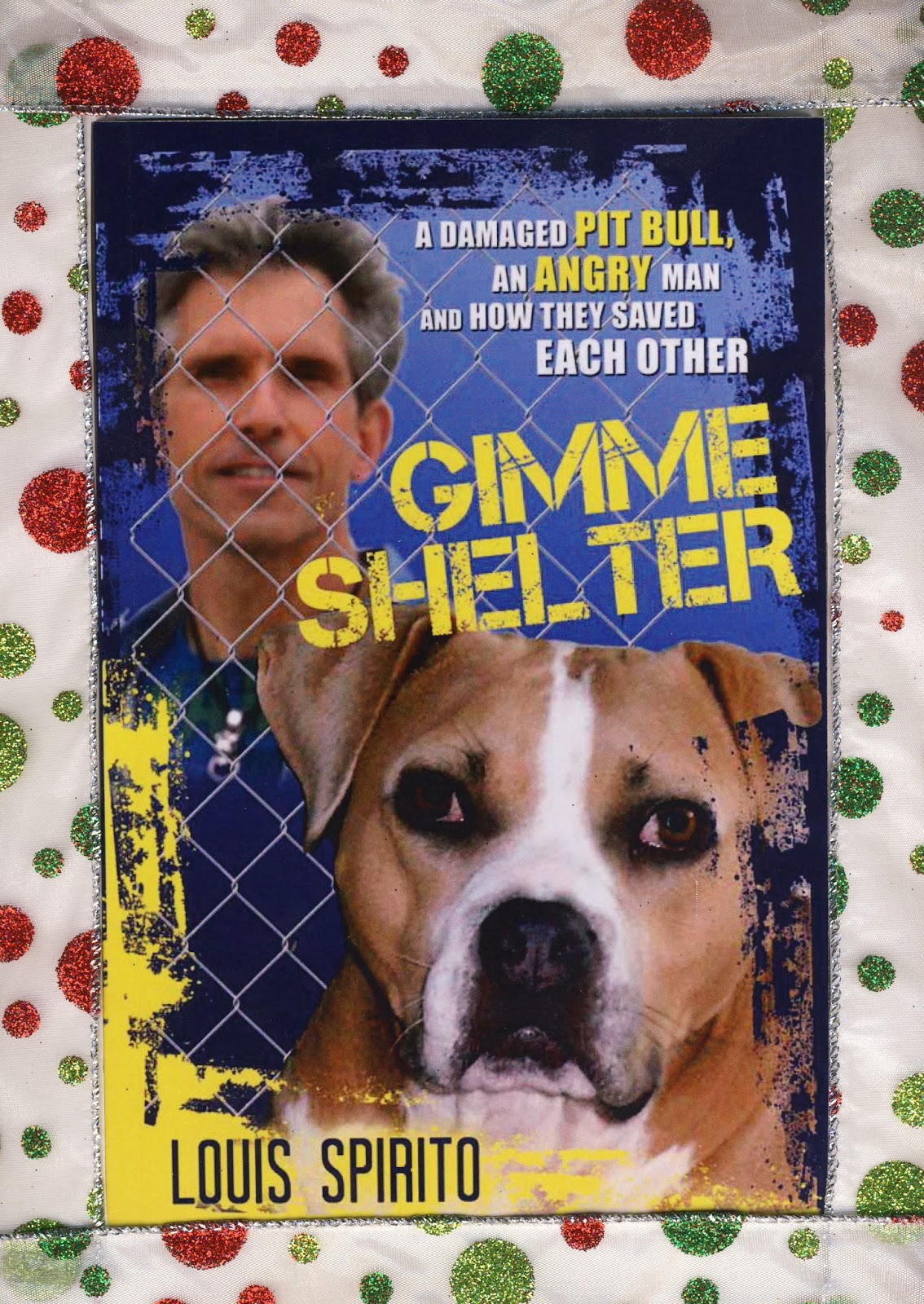
Looking for the PERFECT HOLIDAY GIFT for the log-lovers in your life? Tanner thinks that GIMME SHELTER is just the ticket.
 |















 Louis Spirito