CIAO, SUMMER

I’ve been bugging him for month’s and Lou finally agreed to let me write this post. Good thing, cause I’ve got lots to talk about. First, how about a big ‘hoo-rah’ for President Obama, who came out against Breed Specific Legislation. Here’s a section from the official White House Statement on WhiteHouse.gov: “We don’t support breed-specific legislation — research shows that bans on certain types of dogs are largely ineffective and often a waste of public resources. In 2000, the Centers for Disease Control and Prevention looked at twenty years of data about dog bites and human fatalities in the United States. They found that fatal attacks represent a very small proportion of dog bite injuries to people and that it’s virtually impossible to calculate bite rates for specific breeds. The CDC also noted that the types of people who look to exploit dogs aren’t deterred by breed regulations — when their communities establish a ban, these people just seek out new, unregulated breeds. And the simple fact is that dogs of any breed can become dangerous when they’re intentionally or unintentionally raised to be aggressive. For all those reasons, the CDC officially recommends against breed-specific legislation — which they call inappropriate.As an alternative to breed-specific policies, the CDC recommends a community-based approach to prevent dog bites. And ultimately, we think that’s a much more promising way to build stronger communities of pets and pet owners.”

                                                             ~ ~ ~ ~

Then there’s buzzfeed.com’s photo essay ‘37 Pictures That Will Restore Your Faith In Pit Bulls’, as if mine was ever lost. 
                                                             ~ ~ ~ ~
Finally, check out this ad for Beneful dog food, which has to be one of cleverest dog commercials ever. If only they had featured a certain breed, (guess) it would have been perfect.

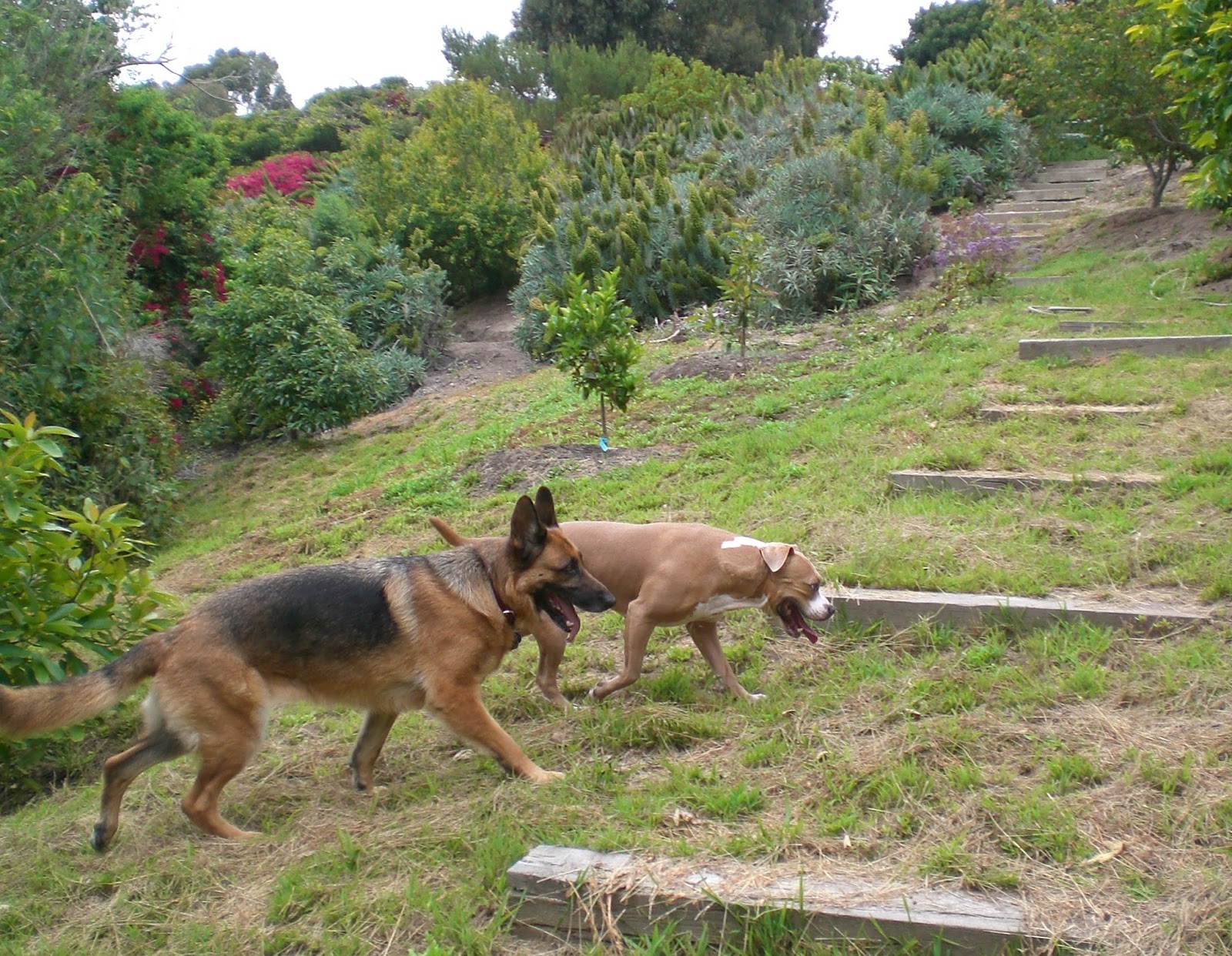
Tanner and Eugenie practicing ‘downward dog’.

TANNER’S SUMMER READING LIST

Although school has already started for some unfortunate kids, Tanner wanted to spread the word about some terrific books he’s gnawing on. First is JIMMY & ME by Lew Bracker, who takes a fond look back at his brief but poignant friendship with the Hollywood icon, cut off before his time. Then there’s Sarah Bracey White’s PRIMARY LESSONS, a memoir of a young African-American girl who was “ripped from her middle-class lifein Philadelphia and transported to a single-parent household in the South where she refuses to accept the segregation that tries to confine her.” Finally, there’s RUBY’S TALE by Patrick Bettendorf, the true rags-to-riches story of a thrown away pit bull and her journey from the trashcan to media darling. Tanner gives them all ‘2 paws up’, and he’s sure you will, too. If you haven’t yet read GIMME SHELTER, be sure to add it to the list. Tanner wants his friends to knwo that there will be no book reports and no one will be tested on the material. Enjoy.

MARLEY & YOU!

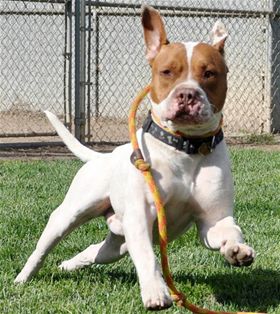
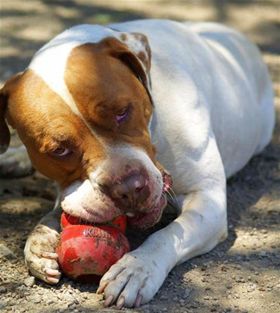
Since November 2011, when his foster mother, Carla, was forced to move, beautiful MARLEY has been living at the Canine Rescue & Adoption League (C.A.R.L.) of Ventura County. We’re hoping one of you can change that. Carla says that Marley is “big and strong but extremely loving and gentle. He had do be taught how to bark by my girl pit, and even then he rarely barked. He never destroyed anything in the house or dug in the yard.  He got along great with my girl pit and even my sister’s male Yorkie, who lived with us. I am attaching pictures of him from the C.A.R.L. website, # 3731. He would  make someone a wonderful pet if they gave him a chance.” Carla would welcome calls or email from anyone interested in him. Her number is 805/302-8428) ckryhalesq@msn.com”

ps – We met Carla at Barnes & Noble in Thousand Oaks where she works and where we had our book signing on August 3.

FIRE YOUR TRAINER, AND GET A DOG!

Following hard on the heals of our last posting, the L.A. Times ran a piece ‘Can Pets Lead Owners to Health? , echoing our claim that walking your dog can help improve both canine and human fitness. 

                                                                                ~~~~~

In the blatant self-promotion category, this weekend will be a busy one for Tanner, Eugenie and me. On Saturday, August 3, from 11:30-12:30 we’ll be signing books at Barnes & Noble in Thousand Oaks, The Promenade, 160 S. Westlake Blvd., Thousand Oaks, CA 91362, (805) 446-2820.

On Sunday, August 4, we’ll be serving as ‘Grand Marshals’ of Malibu’s first annual American Cancer Society ‘Bark For Life‘ fundraising walk. It will take place at Legacy Park in the Civic Center. Registration starts at 10:00 and the event will kick off at 11:00 with a speech from yours truly.

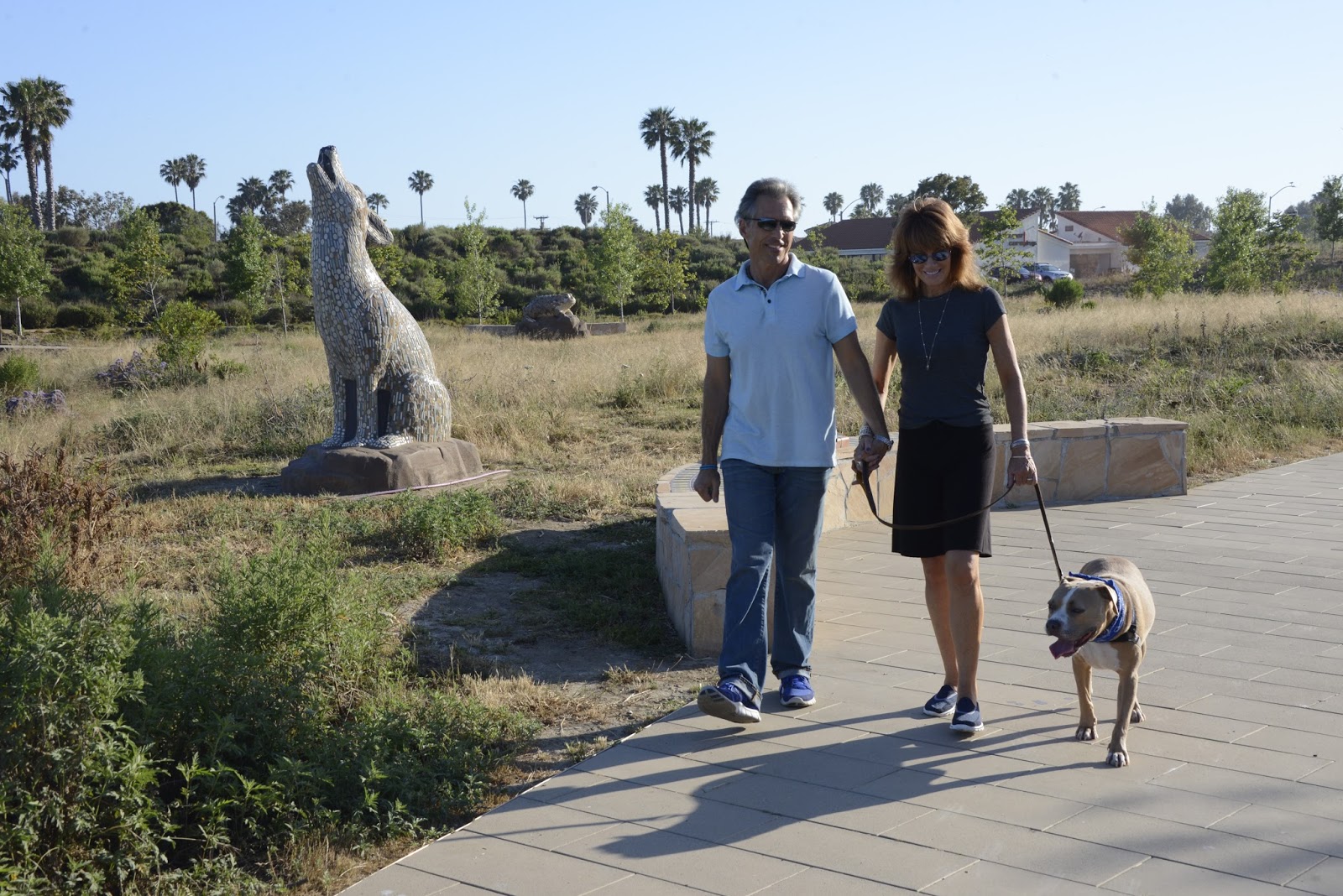
Lou, Eugenie and Tanner @ Legacy Park, Malibu


‘HOT FUN IN THE SUMMERTIME’ – A CAUTION

While I love Sly and the Family Stone’s take on kicking back in summer, for lots of people, it offers a chance to bike,  hike, swim, kayak, golf, ploy tennis, and to make good on that New Year’s vow to finally exercise and shed some pounds. 

If you’re still having trouble finding the motivation, walking your dog might be the answer. Weight-loss guru Bob Harper says an early morning, low-intenstiy stroll on an empty stomach can rev up your metabolism. It’s also great for bonding with your pooch and Bowser’s kidneys will really appreciate the relief. One caution though. While sunny skies might be great for lounging by the pool, summer temps and high humidity can lead to heatstroke in humans and their 4-legged trainers. Responsible dog guardians should learn how to recognize and avoid heatstroke. (from GIMME SHELTER – ‘Dogs & Heatstroke‘)
                                                                           ~ ~ ~ ~
 Dogs regulate their temperature chiefly through panting. Heatstroke occurs on hot, humid days when they can no longer maintain a normal body temperature of approximately 101 degrees F. It often occurs when a dog is left outside on a hot day in direct sunshine or confined in a car, kennel or crate. 
It can strike suddenly, and if your dog’s temperature rises to 105 F or above, you must act immediately. If not, his internal organs will begin to breakdown, and he may die. Even if you are able to lower his temperature, he may still suffer irreversible internal damage.

The symptoms of heatstroke includeRapid panting, Warm, dry skin, Pale gums and a bright red tongue, Anxious expression or disorientation (blank staring, an inability to respond to its name), Increased heart rate, thick, clinging saliva, vomiting, difficulty breathing, Collapse, coma and death follow shortly thereafter.

If you suspect your dog is suffering from heatstroke: It’s urgent to quickly reduce the dog’s body temperature. To do this: Remove your dog from the car, kennel or wherever he was confined and get him to a place with cool, circulating air, like an air conditioned room. If possible, immerse him in a cool (not cold) bath, or hose him down. DO NOT leave wet towels on your dog and DO NOT use very cold water–both can prevent your dog from cooling himself. Ice packs may cause hypothermia.To promote blood flow, gently massage the skin and flex the legs. While you’re working to cool him, it’s essential that he be transported to a veterinary hospital as quickly as possible. Even if you manage to reduce your dog’s temperature, take him to the vet for a thorough exam, since serious internal damage to your dog’s organs might have taken place.

To prevent heatstroke: On hot, humid days, or days with strong sun, NEVER leave your dog in an unattended car. Keep your dog indoors during the heat of the day in a well-ventilated or air-conditioned room. If your dog must be outside, make sure he has cold water, shelter and shade. Since dogs really don’t know their limits, try and keep your dog’s activity to a minimum. If you must exercise your dog, do it in the early morning or evening when temperatures are generally cooler.

Dogs Prone to Heatstroke IncludeYoung puppies, older dogs, overweight dogs, sick dogs or dogs recovering from illness or surgery. Short-faced breeds, like Bulldogs, Shar Peis, Boston Terriers, and Pugs. Cold climate dogs like Malamutes, Huskies, Great Pyrenees, and Newfoundlands. Double-coated breeds such as Pomeranians, Samoyeds, Collies, Shelties, Akitas, and Chow Chows.


‘THE PAW PROJECT’

On Saturday, June 8, we attended a local screening of The Paw Project, a documentary film about DVM Jennifer Conrad and her efforts to ban animal declawing. Like many people in the packed house at the Malibu Film Society, I had no idea just how brutal and inhumane the practice is. I’ve only had one cat, Blanche, whose story kicks off GIMME SHELTER. Ironically, she was a Scottish Fold that looked amazingly like the cat on The Paw Project poster. She had been declawed when we got her and her gait always seemed off, as if it hurt her to walk. Know I know why. If you’d like to learn more about the efforts to ban this sanctioned mutilation, visit The Paw Project website.

Blanche

                                                                         ~~~
On a softer note, a friend recently sent me a terrific piece ‘What Shamu Taught Me About A Happy Marriage’ by Amy Sutherland, that appeared in the NY Times column ‘On Modern Love’. If you love animals, or just have a headstrong mate, here’s a taste.
AS I wash dishes at the kitchen sink, my husband paces behind me, irritated. “Have you seen my keys?” he snarls, then huffs out a loud sigh and stomps from the room with our dog, Dixie, at his heels, anxious over her favorite human’s upset. In the past I would have been right behind Dixie. I would have turned off the faucet and joined the hunt while trying to soothe my husband with bromides like, “Don’t worry, they’ll turn up.” But that only made him angrier, and a simple case of missing keys soon would become a full-blown angst-ridden drama starring the two of us and our poor nervous dog.
     Now, I focus on the wet dish in my hands. I don’t turn around. I don’t say a word. I’m using a technique I learned from a dolphin trainer. I love my husband. He’s well read, adventurous and does a hysterical rendition of a northern Vermont accent that still cracks me up after 12 years of marriage.
But he also tends to be forgetful, and is often tardy and mercurial. He hovers around me in the kitchen asking if I read this or that piece in The New Yorker when I’m trying to concentrate on the simmering pans. He leaves wadded tissues in his wake. He suffers from serious bouts of spousal deafness but never fails to hear me when I mutter to myself on the other side of the house. “What did you say?” he’ll shout. These minor annoyances are not the stuff of separation and divorce, but in sum they began to dull my love for Scott. I wanted — needed — to nudge him a little closer to perfect, to make him into a mate who might annoy me a little less, who wouldn’t keep me waiting at restaurants, a mate who would be easier to love.
     So, like many wives before me, I ignored a library of advice books and set about improving him. By nagging, of course, which only made his behavior worse: he’d drive faster instead of slower; shave less frequently, not more; and leave his reeking bike garb on the bedroom floor longer than ever.
We went to a counselor to smooth the edges off our marriage. She didn’t understand what we were doing there and complimented us repeatedly on how well we communicated. I gave up. I guessed she was right — our union was better than most — and resigned myself to stretches of slow-boil resentment and occasional sarcasm.
     Then something magical happened. For a book I was writing about a school for exotic animal trainers, I started commuting from Maine to California, where I spent my days watching students do the seemingly impossible: teaching hyenas to pirouette on command, cougars to offer their paws for a nail clipping, and baboons to skateboard. I listened, rapt, as professional trainers explained how they taught dolphins to flip and elephants to paint. Eventually it hit me that the same techniques might work on that stubborn but lovable species, the American husband. READ MORE

DON’T RUSH TO JUDGEMENT

By now many people know that a pack of roaming Pit Bulls is being blamed for the mauling death of an Antelope Valley woman who was attacked while jogging. Like many such stories, this one focussed on the breed of dog involved, neglecting to describe the owners, and the conditions in which the dogs were being kept. As details emerge, there’s talk that the dogs may have belonged to a drug dealer and were allowed to roam free, with no training or socialization. Like Rottweilers, Dobermans, and German Shepherds before them, Pits have been the ‘dangerous dog’ of the day, in large part because they appeal to creeps looking for a four-legged weapon to aid their mischief or boost their ‘cred’. It’s sad and tragic that an innocent woman paid the price. While the dogs in question will be found and pay the price, hopefully the local prosecutor will send a message and throw the book at the guilty owners.

                                                                               ~~~~~~
On a lighter note, if you’re looking for a fun time that will benefit animals in need, check out the MAD HATTER TEA PARTY to benefit Sky Valencia’s St. Martin’s Animal Foundation.

CHANGES…HAPPY ANNIVERSARY, TANNER

Saturday, April 13, was Tanner’s four-year anniversary with us and we wanted to share it with you. It feels like only yesterday that we brought him home from the Agoura Hills (L.A. County) shelter, an underweight, over-anxious creature that panicked at the slightest noise or movement.  from GIMME SHELTER: Watching him bounce along on our walks, it’s hard to recall the skittish rescue dog that used to slink behind me, head hung low, bracing for the danger that loomed at every turn; the malnourished stray that ate in fits and starts, stopping constantly to check for unseen assailants. Now he gobbles down his food without a glance. Then he runs to fetch his toys, kicking off each day with affection and exercise instead of threats and abuse. He has grown buff from all that exercise, packing on ten pounds of rippling muscle. He prances proudly, eager to demonstrate his tricks for anyone willing to fork over a treat, or two. Sorry, Tony. He used to pull and strain to greet other dogs. Now he sits patiently (okay, not all that patiently, especially with puppies), until we signal that it’s okay to play, which he does with a gusto and good nature that never cease to amaze me. The homeless dog that slept on the street or, when he was lucky, on a tattered shelter pad, now bunks down in one of three comfy beds, nestled in plush blankets. 

Tanner, 4 years later


FEEDBACK ON THE MALIBU SURFSIDE NEWS STORY

We’ve had all sorts of gracious feedback from friends and neighbors on the Malibu Surfside News feature but I wanted to mention two responses that stand out. One was a note from reader Diane Malecha, a longtime rescue worker, who has fostered many, many Pit Bulls until they could find permanent loving homes. She wrote to thank me for writing GIMME SHELTER and helping raise awareness of animals in need. We’re flattered but it’s we who thank her and her fellow rescuer, Sherman, of Sherman’s Place pet grooming in Malibu, for their extraordinary efforts. Without people like them, we’d have never had Tanner.

Burton & Malibu, two of 8 Pit pups fostered by Diane Malecha

The other amazing response was from a woman who read the story and called the paper to say that she was the good Samaritan who found Tanner wandering on Las Posas Road in Camarillo and later brought him to the Agoura Hills Shelter. We left our number with the paper and asked them to forward it to her so we could personally thank her for saving our boy. We’d also like to ask her a pressing question: How the heck did she get him into the car? As readers and anyone who’s met Tanner knows, he’s no fan of motorized transport.  from Gimme Shelter “Tanner’s an incredibly athletic dog–he can maneuver like Messi, run like Usain Bolt, and jump like Blake Griffin–yet he approached the rear seat like an octogenarian tackling Mt. Everest. On a good day, it took a minute for him to make the climb. On a bad day, you could read Moby Dick before he reached the summit.”

Wally & Zoolie, foster Pits that found a forever home thanks in part to Diane. 


JUST HOW ‘DANGEROUS’ ARE PIT BULLS?

In my haste to spread the word about Maryland’s misguided law (nothing gets a ‘recovering’ angry guy worked up like picking on Pitties), I forgot to include some statistics from GIMME SHELTER about the odds of being killed by a Pit Bull. While the numbers are a few years old, they illustrate how the media’s obsession with these ‘killer’ dogs is perversely overblown. I’m including them now to give you a sense of perspective.

Eugenie and Tanner

– According to CDC studies, about 10 persons die each year as a result of dog attacks. Of that number, Pit Bulls are responsible for approximately 28% or 2.8 deaths

–  In 2008, the Consumer Products Safety Commission reported 7 deaths from fireworks. Based on that number, you are two times more likely to die from a fireworks mishap than from a Pit Bull attack.

– Approximately 10 people a year die from snakebites, three times the number killed by Pit Bulls.

– From 1990-2003, 756 Americans (an average of 58/year) died from lightning strikes. That means you are more than 20 times more likely to be killed by lightening than by a Pit Bull.

– CDC statistics show that every day 10 people die from drowning, the second leading cause of non-intentional death for people ages 1-14. A person is 1,300 times more likely to drown than to be killed by a Pit Bull.

– Every year in the U.S., more than 1,700 children (roughly 5 each day) are killed by their parents or guardians, either through abuse or neglect. A child is more than 600 times more likely to be killed by their caretaker than by a Pit Bull.

–  For every Pit Bull that kills, there are MILLIONS that DON’T!

Resources-  Centers for Disease Control Consumer Products Safety Commission National Lightening Safety Institute U.S. Department of Health & Human Services